Kyle Majchrowski has been on the owner side of construction projects for more than 20 years. He’s watched teams succeed and fail. And he’s convinced the difference comes down to something most project teams skip entirely: the first conversation.
It’s not the schedule. It’s not the contract review. It’s the conversation about how the people in the room are actually going to work together.
Kyle is the author of Powerful Conversations and the founder of Next Intent, a consulting firm that helps project teams and organizations build real connection before the work begins. He also runs Ripple Intent, a nonprofit that hosts monthly Breakfast Club sessions in about 15 cities around the country, where construction professionals and others walk through structured conversations on topics like trust, self-awareness, and communication.
In this episode, Kyle walks through the exact process he uses to facilitate a powerful conversation on a construction project. Forty-five minutes at the start. That’s all it takes.
What You’ll Learn:
- – What a “powerful conversation” actually is and why it works on construction teams
- – The one question that reveals how every person on your team thinks about trust
- – Four cornerstones of trust and why superintendents and architects often clash over them
- – Which personality assessments are worth your time (and which ones are crap)
- – How to move between team member, guide, and authority within the same meeting
- – The reply-all test that exposes your team’s real communication culture
Listen or Watch the Episode
Why Communication Keeps Showing Up as the Biggest Problem
Ask any project team what went wrong on their last job. Someone will say “communication.” Everyone nods. And then the team moves on like they all agree on what that means.
They don’t.
Kyle has seen it play out over and over. One person thinks good communication means copying everyone on every email. Another thinks it means fewer meetings. Someone else wants to use every piece of technology available.
The problem isn’t the tools. It’s that nobody stops to ask what communication actually looks like for the specific people sitting at the table.
Kyle’s process starts there. Surface level. Definitions and experiences.
Then it moves step by step into something deeper. Where has communication worked for you? Where has it missed? What’s your default? And then the real question for the group: what do we do with all of this?
“The best projects were the ones that had the people who actually spent time talking about seemingly basic concepts in a deep way,” Kyle says.
Trust Isn’t What You Think It Is
Every project kicks off with some version of “we need to trust each other.” Everyone nods. Nobody unpacks it.
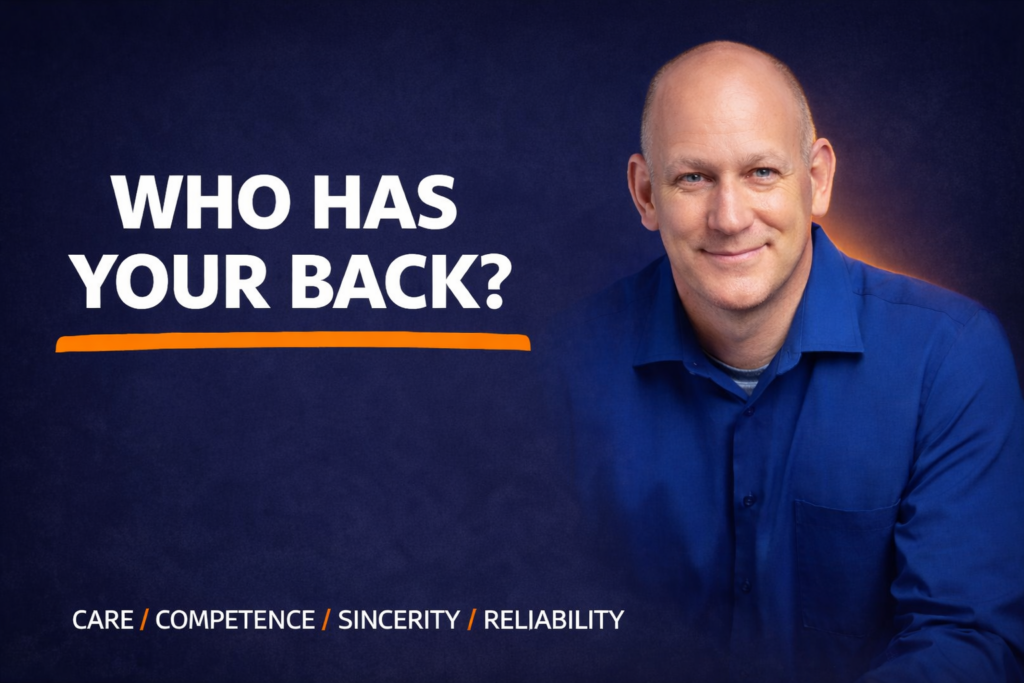
Kyle’s definition of trust will make you pause. He defines it as “the belief that other people have your back when you’re not in the room.”
That’s different from reliability. Different from competence. It’s about whether the team puts the project’s interest ahead of their own when no one’s watching.
Kyle uses Charles Feltman’s model, which breaks trust into four cornerstones: care, competence, sincerity, and reliability. Different people lead with different ones.
A designer might approach trust with care. A superintendent might come at it from a competence perspective. When those two sit in the same OAC meeting, tension shows up fast.
The architect who shows up five minutes late and apologizes? The superintendent, rooted in competence, sees that as a trust violation. The architect is trying to reconnect through care. They’re both operating from trust. They just don’t speak the same language.
Kyle’s process helps teams see that at the start. Before three months of friction, it becomes obvious.
The Question That Reveals Everything
Kyle says the single best question to start a trust conversation is simple. Do you naturally trust people, or do you expect others to earn your trust?
It’s not a trick question. Most people can answer it quickly. But the answers are roughly split 50-50, and what comes of that split is eye-opening. Younger professionals tend to come in trusting. Give it enough years, and most people build up walls. Some circle back to trusting everyone again because they’ve realized life is better that way.
That single question is the start. Forty-five minutes later, your team is different.
Self-Awareness, Leadership, and the Reply-All Test
Kyle is a big believer in CliftonStrengths (the StrengthsFinder assessment). It takes 15 minutes. You can spend a lifetime studying the results. And you can’t easily manipulate it.
He also recommends the Enneagram. He’s less impressed with DISC. He thinks it oversimplifies people by reducing them to four categories.
On leadership, Kyle coaches project teams to move between three roles: team member, guide on the side, and authority. Sometimes the shift happens within the same meeting. Knowing which role the moment calls for is the difference between good leadership and great leadership.
And one of his simplest diagnostic tools? Ask your team whether they’re going to hit reply-all and say “thank you” on emails. The answer reveals more about your team’s communication culture, recognition habits, and friction points than you’d expect.
If you’re heading into a project kickoff, take 45 minutes and try this. Ask your team one question: do you naturally trust others, or do you expect them to earn it? Then listen. You’ll learn more about your team in that conversation than you will in the first three months of submittals and RFIs.
Resources
Connect with Kyle Majchrowski:
Next Intent: https://www.nexintent.com
Website: https://kylemajchrowski.com
LinkedIn: https://www.linkedin.com/in/kylemajchrowski
👉 More from Construction Genius
- 📘 Get the book Construction Genius:https://www.amazon.com/Construction-Genius-Effective-Hands-Leadership/dp/B0BHTRDY1T/
- 🧠 Learn about The Shift: Construction Leadership Course