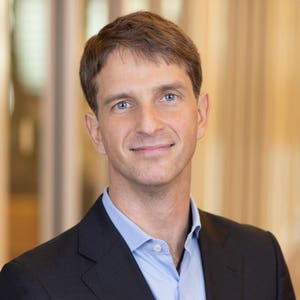
Today’s guest is the founder of ALICE Technologies, who obtained his PH.D. in artificial intelligence applications for construction as a Charles H. Leavell fellow at Stanford University. René Morkos identifies the four paradigms of construction scheduling and talks about how ALICE Technologies built the Fourth Paradigm. He also explains how the 4th paradigm makes the impossible possible to avoid construction delays. René also discusses the three generalized construction constraints. Today’s conversation is something you should listen to. Join René in this insightful episode.
—
Listen to the podcast here
The 4th Paradigm Of Construction Scheduling
This interview is kick-ass. I’m so glad you’re here. It’s with Rene Morkos. He is the Founder of Alice Technologies and he has a PhD in Artificial Intelligence Applications for Construction from Stanford University. He’s a second-generation civil engineer with many years of construction experience that is divided between industry and academia. At Alice Technologies, they’re all about scheduling. It’s a new era in construction scheduling. We dive into the four paradigms of construction scheduling and the importance of having a mindset shift from being task-based when it comes to construction scheduling to being constraint-based.
I don’t feel like I’m doing justice to the substance of what we’re talking about in the interview. I got done with the interview and it stimulated a lot of my thinking and I know this is going to stimulate a lot of your thinking. We begin the interview with a discussion about one of Rene’s trips to climb a mountain and how that relates to him going after this big problem in the construction of scheduling.
I know you’re going to enjoy this interview. I encourage you to read to the end because there are nuggets of insight and wisdom scattered throughout the discussion that are going to help you in the way that you think about your business, your life, and construction itself. Be prepared to be enlightened and refreshed. Thanks for reading. Share it with other people. You must share this interview with other people. It is that good. Now, to my conversation with Rene.
—
Rene, welcome back to the show.
Eric, it’s great to be here. I enjoyed our last conversation. Good to be back.
It’s a pleasure and to give the audience a quick heads-up. We’re going to dive into the fourth paradigm of construction scheduling. Before we do that, Rene, you had a wonderful trip to the Matterhorn of the Himalayas, Ama Dablam. Tell us about that.
It means mother’s necklace. That mountain has enchanted me. It’s consistently voted the most beautiful mountain in the world. It’s this giant. It’s a Matterhorn of the Middle East. You know Toblerone chocolate, that mountain that’s on the Toblerone chocolates? It looks like it, but it’s not in Switzerland. It’s not in the Alps. It’s in the Himalayas. Amazing trip. We basically flew to Kathmandu and then, seventeen days later, we came back. It was incredible. Camp Two is one of the most famous camps in the world. It’s like a rock they put these little tents on. I used to think that you need to put a tent on a flat surface, but apparently, that’s not the case. You can put on a bunch of rocks.
Let me ask you this, though, Rene. Why do you do these types of trips? I’ve done some hiking before and some climbing. I’ve climbed Mount Whitney. I’ve climbed Mount Shasta. Those are relatively high mountains, but the one in the Himalayas, though, that’s an intense commitment of time, effort, and obviously, there’s a lot of danger associated with that. What drives you as far as doing that stuff?
On the danger part, like nothing safe, but on these mountains that have guided expeditions, the safeties. These folks have been doing it for 40 years without incident. It’s put that into perspective. Mountaineering is one strange sport where nobody skydives without a license. Nobody scooter dives without a license. For some reason, people think that they can waltz up a 7,000-meter mountain and outwill it. That’s one principal reason why you see a lot of these accidents.
Why do I do it? The same reason I am an entrepreneur. I like hacking at something large repeatedly over and over again to get it to work. I don’t know. I don’t feel alive when I’m not doing that. I could have exited the company earlier, but the funny thing is that if I saw the company, I’ll look for the next thing. The large painful, nauseating aspect of it is I like getting the crap kicked out of me.
It reminds me of something that Elon said released. I don’t know when he said it, but something about his success is tied to his ability to endure pain.
That’s funny. I have a different one. I say to myself, “Success is about how well you can lie to yourself.”
Tweet: Success is about how well you can lie to yourself.
Tell us about that. What do you mean by that?
It’s a mind game. No one in the world wants to work eighteen hours a day. You might for a week, 2 weeks, 1 month, 2 months, 1 year, 2 years, whatever the heck it is. At some point, you want to tap out and then it’s a mind game. I’m doing it because X or Y or whatever. When you’re climbing these mountains, it’s absolutely nauseating. There’s no aspect of this that’s pleasant.
The minute you get to 5,000 meters, it’s painful, miserably so. Every step is painful. Lying in bed is painful. You’re not feeling well. When you sleep, you got to wake up gasping for air. It’s a painful process, but when you’re halfway up the mountain, there are lots of reasons you want to turn around. “I have the cough and the flu and if I go a little higher, maybe the flu will get worse,” or whatever. It’s how the brain works, but to me, a lot of these endeavors are like finding some reason within yourself to keep going some game.
I want to see how far I can push it. I want to see how far I can go. A favorite one of mine is the voice in my head that is like, “Is that all you got? Is that all you are?” When I usually come back very angry and go, “No. I got more.” The grand scheme of things. It doesn’t matter. It’s not real. It’s in my head, but I think that’s a lot of what success boils down to. How can you set it up internally? What are the mechanisms or what is the story that you need to tell yourself to keep going?
How do you think this story that you have to tell yourself? How does that differ? I’m thinking of you as the founder of your company and the CEO. How does that differ from the story that other people in your company need to tell about themselves?
It’s an interesting question, Eric. Somebody asked me how do we motivate people. What is our culture? I said something I think would shock most people. I said, “Not everybody at Alice Technologies is dying to build construction tech.“ “That’s so interesting. What do you mean? You’re the founder, you got to celebrate but in the vision,” I said, “No. There’s 70, 80 people at the company. Every single one of these people has a slightly different reason for doing what they’re doing.”
One thing I can tell you is that one commonality across the field is everybody wants to pick a big, difficult challenge that has a large impact. That is what they’re passionate about. It just so happens that construction tech is the medium that they found to express that part of themselves, but something that’s common across every companies, they’re all a little bit out of the box. They’re all a little bit quirky in some way. They all have some cool hobbies. They like to push the envelope. They like to want more for more. They’re willing to take a bigger risk. They’re willing to work a few extra hours. That’s common.
To answer your question, every person in the company has their own reason for doing what they’re doing. Interestingly enough, I don’t try to take that into a job away from anybody. I don’t come in and tell them, “You have to love that we are building the best construction scheduling software in the world,” because trust me, like 30%, 40%, maybe as high as 50% of people in the company are there to do that. Even at the executive level, some people are like, “I care about is I’m working with a top-notch team, working on top-notch problems and applying deep tech technology to solve something. It’s something real. It’s not a not a toy.”
It’s interesting because it seems like what you’ve been able to do is to identify one focus point, which is everyone wants to pick a big difficult challenge to work on, but then when you peel the onion of the why for each one of them, it could be different reasons why. That’s okay because we’re agreeing on that one big why. Is that right?
It’s 100%. What I tell everybody in management is to pick your style and stick to it. Whatever style you have, do not change the style. That’s the worst thing to do because if you have a certain given style, the people at work well with that will be the ones that get attracted to you and work with you. For me, for example, people like, “You should have this reality distortion field. You should tell everybody how this thing is going to be worth a bazillion gazillion dollars.”

Interestingly enough, when I pitch people to join the company, I’m like, “It’s going to be painful. It’s going to be miserable. There are a lot of days you are going to wonder, “What did I get myself into?” The highs are high and the lows are low. On the days that it’s working, you will have the privilege of having built and created something that few people get to do. We are a small group of people that has figured out how to optimize 10% of all GDP. That happens once in a lifetime. There’s something interesting in that. Do you know what I do for a living? I’m a miner. I mine for a substance. I am looking for it. The people that follow me. There’s a tiny smidge in the amount of that substance.
An entire room full of people might have a microgram and people follow me. They follow me into the gardens and into the caves. It’s muddy. It’s cold. The chances of success are small. They’re up against companies that are far better funded or up against serious technological risks, etc., but when you hit that substance, when you find it, that stuff changes history. That’s the stuff that you can plug armies into. When people come to Alice, oftentimes they will sign the contract and I start to push them.
They dig into themselves and oftentimes, I reach a point where they break like, “I don’t want to do this anymore.” Here’s what’s interesting. That that’s where the growth happens. What’s interesting is that one of two things happen. Option A, they come back and they say, “I was golfing, close to win. It was the weather, it was the mountain, everything else. You all sucked. The game wasn’t fair,” and they exit.
The other option, that’s what I think most people don’t get because they’re like, “What do you mean you breaking people? What do you mean people are driven to points of no return?” What I tell folks is a lot of people who work at Alice, in some ways, want that. I wanted it. I wanted it when I started my PhD and the folks that drove me to the PhD did that to me.
What was interesting about them was that they didn’t care whether I was doing better than them. They kept telling me, “You can do better,” and I’ll produce something like, “Yeah, that’s not good enough. You can do better.” What’s interesting is that in that second option, what arises from the ashes is someone who’s gone through that next growth and suddenly, they’re invincible. They go, “I want this. I want this like a challenge. I want to be able to do this thing that we’re doing.” That’s what I do. I mine for that substance and I help people find it within themselves that motivation.
The Name Of The Game Is The Why
What you’re mining for is that invincibility, is that we were saying?
The why. That is it. The name of the game is the why. Most people are like, “If I found the thing I love, then everything would be easy.” That’s the biggest fallacy. Bhink about it. It doesn’t work that way. I hate it so much at one point. In my third year in my bachelor’s degree. I was like, “No. I hate this thing. I never want to do it ever again. I’m going to finish this degree and never want to see it.” I put 15,000 hours of my life until you’re in a PhD. It’s beautiful. If you want to love something, put 15,000 hours of your life into it. That’s more the way it works.

It’s interesting because people come to this point in life where they have, like you say, option A which is almost to project on others and circumstances and allow other people in circumstances to control them. Option B is to look within and so to speak go through that death and accept that which then leads to the rebirth or the life and in that rebirth and in that resurrection is the power.
You can tell literally that person will come to work and they’re wearing a $9 Casio watch. They suddenly are wearing black T-shirts. There’s suddenly entirely mission-driven. There’s a depth of satisfaction from doing what they do. That’s cool. It’s cool watch. Maybe not everybody gets there.
The 4th Paradigm
Let’s talk about then the optimization of the 10% of the world GDP, which is construction. I want to pivot to this idea of the four paradigms of construction scheduling. Why don’t you kick off and give us some insight into that framework there?
I think when people look back at the evolution of construction scheduling, as a company, we started to push back and say, “You’re not actually scheduling. You are simulating.” That’s what you want to do. What people find is that they will have gone through four phases. The first is people doing it with paper and pencil. Henry Gantt was doing this in the early 1900s.
Why is it important for people to understand the distinction between those two words? They’re interesting, scheduling, and simulation. Why is it important to think of it in terms of simulation?
I think it’s hugely poor for the industry. Thanks for pointing that out. Scheduling is I got a list of the tax. I’m putting them together. I’m trying to roughly shuffle them such that they correspond to an accurate way to build this building. The challenge here is that you’re not modeling reality. It’s an abstraction. It’s a set of tasks. You might not be modeling labor. You might not be modeling equipment. Their constraints could be violated either because you didn’t see it or because you didn’t model them.
With simulation, one of the famous computer scientists at Stanford said, “If you want to understand the problem, model it on a computer.” If you’ve modeled it on a computer, then you’ve understood it. If you’re a computer simulation looks like reality, then you figure out how the darn thing works. For us, if you want to optimize construction, you first want to start with simulation. You want to say, “I want the computer to build this building for me six million different times accurately.” If you can do that, then you can now start optimizing and you’ve correctly counted for all of the variables.
That’s why we think it’s such a big difference between scheduling and simulation. The output of a simulation is a schedule. An output assimilation is a 4D model. An output of simulation is analytics but there’s a difference between creating a schedule directly or creating a simulation that can be viewed through the lens of a schedule. The simulation is basically creating reality. That’s why I think it’s such a big leap forward.
Tweet: Simulation replicates reality.
Simulation is creating reality. That’s interesting.
Replicating reality may be more accurate. Henry Gantt needed to manage war production during the First World War, so they started using Gantt charts. Paper and pencil. He started with that 1980s folks who computerized the critical path method. Pretty cool. You could now model a bunch of tasks. You could change the precedence relationships. You could copy the task. You could do a bunch of cool stuff like that. We as Alice Technologies invented a 3D-based effectively visual constraint modeler.
You could take a BIM, take a 3D, you can set it, add a bunch of constraints to it and then hit the simulate button and the thing would build the project for you. Six million different ways. One crane, two cranes, over time, no overtime. The best way to think about it is we now call Alice Pro, the 3D software. It did for construction what BIM did for design. The first time ever you could change your variable like add a crane, add a crew, try overtime, hit the button and it would be simulated for you.
The fourth paradigm is what we released publicly. We’ve been working on it with our better customers for a couple of months or three months. It’s great this paradigm we brought to the world. The ability to reschedule. Most people don’t think of it as strange, but you can’t ask your schedule, “There’s a delay. What do I do?” What the heck? The point of the software should be to tell you how to get out of a delay. We figure that out. We cracked that knot with the original schedule or with the Alice Pro.
We sat down and thought to ourselves, “Wouldn’t it be cool if you could take that juice, if you could take that AI constraint-based optimization and apply it directly to an interesting schedule?” As you can imagine, it’s tricky because a good analogy for this is to imagine that the constraint-based role is a 3D object. What we’ve built with the 3D version of our software was the ability to model constraints, labor, equipment, materials, calendars, crane radii, crane locations, producible material, reusable material, and consumable material, over time. That kind of stuff.
Some of these things are “in existing schedulers,” like existing schedules do have calendars. The truth is that the way that these constraints are modeling existing schedulers are bad, to put it mildly. You can’t go to an existing schedule and say add a crane or change the crane radii or model reusable materials or change production rates globally or do a bunch of stuff that way. The constraint-based universe unlocks this very versatile, very powerful way of being able to simulate projects.
The Precedence Relationship
If you want to simulate reality, if you want to basically mimic reality, you need to be able to tell the software, “Here’s how the world works. Here’s our labor-culturing materials production.” It’s always going to have things work. To do that, you have to basically speak in the language of constraints. Now, when you go to existing schedules, they’re usually a list of tasks. They have precedence relationships. That’s how things are modeled. Now, from a theoretical perspective, what’s happening is, for some reason beyond me, our field uses precedence.
To do B, I must complete A first. That is called a precedence relationship. We use presence relationships to resolve all constraints. Everything is twisted into the lens of presence. Labor, equipment, calendars, production, all that stuff is jammed into precedence. It’s a horrible idea. That’s why our field doesn’t have this advanced AI stuff. I’ll put it this way. When I was first uncovering this, I called the guy from operations research PhD at Stanford and he came over. There’s a common area in the dorms. I sat down and started explaining this to him.
Tweet: We use precedence relationships to resolve all constraints. Everything is like being twisted into the lens of precedence.
He’s listening to me for twenty minutes and he gets up and he says, “Why would you ever want to use precedence to resolve resources? That’s the dumbest thing I’ve ever heard,” and then he walked out of the room. The reason it’s a bad idea is that you can’t reschedule, you can’t query, you can’t change, you can’t modify it. From a construction analogy, we’ve basically poured concrete on the problem in order to make it the most unpermutable formulation of the problem possible.
We take a computer which is good at permutations and then we define the problem in such a way the computer can’t permute. It’s crazy. Here’s basically an example of how it works. If you’ve got three tasks A, B, C, you have one carpenter. If I got one carpenter, in current scheduling software, I draw an arrow from A to B, B to C. Let’s assume A, B, C need carpenters. Are you with me?
Absolutely.
Draw an arrow from A to B, B to C. Cool. Did the software try B A C, C B A, A C B? There are lots of other sequences. In order to do that now, you got to go and delete that arrow and redraw the arrow. That’s a simple example. This is the simplest example of how using precedence locks your problem in so you can’t permute. Now, we figured out how to do that in this example again, it was labor. We figured out to do that with calendars, overtime, and production. The everything.
The whole thing. The whole shebang. The challenge we’re facing was people loved it. People are like, “Guys, we’ve loved this vision that you have for the industry, taking 3D models, setting up these constraints similarly to everything.” It takes weeks to set up. Also, it doesn’t integrate with the existing systems. We thought to ourselves, “What do we need to do then to do this?” What could we take this constraint-based universe and apply it to a list of tasks? It’s tricky because existing systems that don’t define crane radii.
There’s no way to do that. There’s no box. There’s no entity called a crane inside of an existing schedule. Existing technologies don’t define resources in a way that allows you to do this constraint-based stuff. The first is we don’t know if it’s possible, so I was told. However, if we figure it out, we’ll be able to ingest an existing schedule, not have to set up with 3D, not have to do anything. We literally hit simulate. That’s a pretty lucrative pot of gold at the end of the rainbow.
Long story short, we cracked it. We figured out how to do it. We build this translation layer between the old and the new world, between the constraint-based on the tasks-based world and we now have the ability to ingest schedules and start optimizing them. The thing that’s crazy, I’m still blown away, but our setup time used to be like several weeks. Twelve jobs, two weeks. Medium job infrastructure, four weeks. Heavy industrial, $300 million, $400 million, $500 million , 8 weeks, 10 weeks. That’s usually set up time.

We would go to clients like, “Guys, it’s going to take eight weeks. We’re going to hammer it out. We’re going to do this. All right, guys, we’re going to drink some beer, chew some gum. Whatever they need to do, they’re going to get it out.” I’m literally gone to the point where I go to meetings and I’m like, “I don’t want to tell you anything. I want to show you. Do you have a schedule? Perfect. Let me have it.” We’ve learned to sign the NDA before the meeting. They give me the schedule. I’ll load it in the system, it translated in the constraint-based model, and you’re off to the races.
The key there is getting out of the task-based mindset into the constraint-based mindset and in that constraint-based mindset, you’re thinking more in terms of simulation than you are scheduling.
What interesting is that we figured out that the constraint-based mindset through using 3D models. We then went back and said, “Let’s go back. Let’s take a step back and apply constraints to a list of tasks.” They notice that the first paradigm is to draw paper and pencil. The second paradigm is task-based systems. The third paradigm is 3D constraint-based. The fourth paradigm is constraints to tasks like the combination of the prior to.
It’s interesting to reflect on the need or the perspective of going backwards in order to go forward. Thinking about a prior technology and considering the whole technology and what you might take from that not necessarily the whole thing, but the one aspect of it which is relevant and useful and build upon it to create a new technology or a new approach.
I can even flip what you said. It’s even going forward, so you can go backwards. We have to go forward into the 3D so you can then step back into 1D task-based list of tasks, but we had figured out all of the magic potions in the 3D world. We stepped back into the 1D world and we’re like, “Can we apply it here?” I have a friend who’s a philosopher. He reads a lot of philosophy. I was like explaining to him, “We’re about to release this new product and we think that can bring constraints into task-based.” He said, “It sounds like you’re bringing heaven to Earth.” That’s a nice analogy. You’ve moved, you’ve learned all these great powerful tools up there in the heavens, but now you’ve brought them back into the stuff that we’re using every day.
Let me pursue that because construction is a very earthly endeavor and trying to apply heavenly things to an earthly endeavor often can be constrained, since we’re using that word, by the earthly nature of the people that you’re bringing it to. When you’re through this, I’m thinking about all the complexities involved in the construction project that are not only schedule-related but also so people-related. How are you introducing this technology into a construction project? What’s the best place for you to introduce it so that it gets adopted?
What we’re doing now is we literally go talk to the superintendent, the project manager, the scheduler, whoever is producing or managing or dealing with the schedule. We go, “Did you love spending hours and hours and hours going through these things? If you do, we’re not the tool for you. If you’d like to do this for maybe 30 minutes instead of like 6 hours, literally upload it, press the button, and schedule it.”
Are you talking then your core client, or is it more on the general contract contractor side? Is it the specialty contractor or a combination?
Our business has been historically general contractors and maybe 75% GC and 25% owner.
You go to the owner.
The thing that’s powerful in this new system is that with Pro, with a 3D-based thing, the owner would say, “I will create this new separate universe, the constrained-based universe,” and then have a conversation on the GC. In some cases, it works in some cases, it doesn’t. With this new approach, the owner says, “I’m not creating anything new. Can I have your schedule, Mrs. GC?” Great. Within fifteen minutes, the owner can say, “Mrs. GC, did you consider the fact that you need this many resources? Did you consider the fact that if you actually reschedule it, we sequence a good look like this?”
“I’m not telling you what to do, but FYI, if you try overtime on the month of steel workers, it seems to have a out outweighed impact on schedule duration or cost.” That’s the stuff you can start doing with it. We used to target projects, Eric, that were $100 million. Nowadays, I’m not in conversation with folks that are doing products for $1 million to $10 million, which is crazy. Back in the day, if I wanted to set it up, I needed to spend four weeks setting it up and that cost got to go somewhere.
Now, I spend 30 minutes. If you are working on a small job, financially, it wouldn’t make sense to hire us as people that were running it for you. Now, it’s crazy. Obviously, if you want to optimize construction projects, you’ll want to optimize resources. You can either import resource-loaded schedules or we have a patented or we’re thinking of filing a patent for assistance that can rapidly optimize the resource loading.
It’s interesting because as you’re saying this, I’m thinking about how as technology develops, it becomes more accessible. You take my phone. Everybody has one of these now and this is blowing your mind. Years ago, every single person on the planet would have this. The way you’re describing it where you’re target has changed because of the development of your technology from those large complex projects to perhaps even something pretty simple and straightforward.
It’s funny, I’ve often thought of Steve Jobs or Elon Musk. It’s got to be usable and easy. Yes, I get the tech is impossible. It’s never been done. It’s never been solved by anybody, but not only do I want you to solve the unsolvable, but I need to get package it in a pretty way. It’s interesting they come to the exact same conclusion. People like, “What do you mean you’re going to convert construction to algorithmic terms? What do you mean you’re going to convert construction to generalized constraints that you can then plug into the computer?”
I’ve heard this. You could never explain to the computer the complexity of a construction project. The thing I do in my head is a human like there’s no way you could explain that to the computer. It’s impossible. We did it. We did it, and it’s been done in every other field, FYI. What’s interesting, though is that we did it, but until it was like press the button easy, the adoption was slower. There’s a certain that you can’t give it to the masses, so to speak. With this thing we released, we’ve now packaged in a way that’s like literally press the easy button.
Tell me how you got enough of constraints and the mindset that construction is different because we hear that so much.
You’re hitting a nerve. That drives me up the wall. If I read one more construction publication that has the following words, “We are a magical, mystical unicorn. We build unique structures that have never been seen by anybody anywhere ever in the world in the past or the future, history of our species. It’s a custom-made factory that are far away from anything.” What a pile of BS. That drives me up the wall and I think that’s been a big mistake that we’ve propagated the industry.
I bet my career improvement that wrong. I’ve poured concrete on four continents. I’ve done in Afghanistan, Abu Dhabi, Dubai, Prague, Amsterdam, LA and San Francisco. There’s one way to pour a concrete column. You’re going to put the rebar. You’re going to put the formwork. You’re going to pour the concrete. You’re going to strip throughout the concrete and strip the formwork. That is the only way to pour concrete in the world. The same thing that I bet my career on was that, yes, I get that the way the elements come together is very different from building the building, but the truth
Concrete slabs are concrete slabs. Columns or columns even facades of standardization. That’s the part where you hit a nerve with that right, which is like we can’t keep resting our laurels on this excuse for the rest of time like, “It’s too complicated but there’s nothing we can do about it.” No, other fields have done it. If you look at factories in the 1900s, they were crappy places to work. They have to work eighteen hours a day. My grandma and in the Czech Republic will tell me like, “Yeah, back in the Industrial Revolution.”
Her parents or grandparents woul work 14 to 16-hour days in the factories, and they were crappy places to work. Digitization, optimization, etc. Nowadays, you think of factories as high-tech places. The same thing is happening under our very feet. This is happening the construction now. What happened to the manufacturer in the ‘70s and ‘80s is happening in construction now. It’s great to see. I’m so happy when I see other construction start-ups that are in scheduling. I’m like, “This is great. I’m so happy.” I wish there was ten times as many of us in the world.
I’m good friends with a number of them. We send them business. They send those businesses. We call market with them. It’s a $14 trillion industry and needs 100 times more start-ups and 100 times more people, but I’m so glad that finally, both the younger generation is going after creating these technologies and the older generation they’re sitting in these companies are willing to try, then go for it and folks like you are evangelizing it. It’s the most exciting time to be in construction in the last two millennium. Awesome.
Let me give you a little pushback on what you’re saying. Some of the mindset that you’re up against is this mindset. I get it that a concrete slab is a concrete slab, but my crew in Kandahar are completely different than my crew in Lisbon, my crew in London, my crew in Washington, or my crew in Sacramento. Sub-base is different, the union is different. All these things are different.
Proxenates are different. The productions are different. The language is different. Sure, so what? Why can’t you simply have those as variables in your system that you can change? So what? Literally, if you want to pour it, why can’t you say, “We’ll pour a concrete slab. That requires five tasks. Depending on where you are in the world, here’s what those tasks will look like.” That’s the that’s the leap. That’s the part where I’m like, “It’s doable.” I have proven it. I’ve done it. Alice Technologies, Alice Pro, was the proof that it’s doable.
The question that I often invite people to ask me is, “How many times do we encounter constraints that we can’t model?” i.e. somebody gives us something and we’re like, “I know how to do that.” Never. It doesn’t happen, literally. That means that we’ve solved it. You can literally take construction and put it into the computer. We found the language in which to do that. Excuse the industry that says this over and over, “It’s too non-standardized.” Other fields that are non-standardized have done this.
This is interesting because again, this goes back then to transforming your thinking from task to base to constraint-based and if you can embrace that constraint-based way of approaching any project then like you said, all you’re doing is identifying and describing your constraints and taking those into account as you are building your project.
This is exactly what my PhD was. The reason people think it’s impossible, it’s like, how can you possibly define a million different constraint types? Your software would need to have a million buttons or 10,000 buttons for it to be useful. That’s why it’s impossible. I agree. If you want to model every single constraint type itself, then yeah, but the truth is it turns out that if you model construction as elements that are constrained by physics, some elements sit on top of each other, you can’t build the roof before the foundation.
Elements constrained by physics that need tasks and resources they get built. If you model your construction that way, a lot of times people like, “Alice could probably be using only commercial buildings or only parking lots or only tunnels.” Eric, it doesn’t matter. We’ve run on data centers, parking lots, high rises, skyscrapers, tunnels, bridges, hospitals, and airports. It doesn’t matter.

It’s an element sitting on top of other elements and you need some tasks and on top of other elements, you need some tasks and resources to build it. There are some resources available to do so. If you model a problem that way, suddenly you start seeing there’s an awful lot of similarity between construction projects. In fact, what blew me away when I did the PhD was I had converted construction constraints into three generalized scheduling constraints. When we started the company, I thought to myself like, “I’m sure there’ll be more.”
What are those three?
There’s a precedence, disjunctives, and discreet.
We’ve talked about precedence.
Before you do B, I have to finish A. For me to pour the concrete, I have to finish the formwork. Disjunctive is a spatial constraint. Capacity is exactly going to be one. There’s only one space available. A can happen in the space or B can happen in the space. They cannot happen at the same time. That’s disjunctive. C is discrete. Discrete because we tend to have 1 crane, 2 cranes, 1 crew, 2 crews. You don’t have one and a half people. That’s what it’s going to discrete constraint. It’s a capacity constraint.
If I have 2 cranes, don’t schedule 3 crane tasks on Tuesday. Originally, when we started the company like, “I’m sure we’ll find like other ones will need firms.” I can pull everything down to this. If there’s a weather constraint, that delays the time. You can schedule something. Labor, equipment and material are all discrete constraints. Temporal stuff, like when you want to schedule something, you can’t schedule things on top of each other, that’s disjunctive. You can’t paint the wall before you finish it. That’s precedence. You’re seeing that you start to translate these things back into like the primary constraints I talked about the discrete, disjunctive, and precedence are mathematical, so computers understand those.
Tweet: You can’t schedule things on top of each other that’s disjunctive.
The thing that’s cool is people think construction as this unknown field and it’s not very sexy. Once you dig into it, Eric, we are actually working on some of the biggest most complicated problems in the world. Our field is unmatched in terms of operational complexity in terms of you’re building a $300 million, $400 million project. Very few human endeavors include that many tasks. The size and the scale of the stuff that we’re working on are mind-blowing. It’s the uniqueness of it. I’m like, “There’s a way to mathematically model these things.”
Tell us a little bit more about how people can get in touch with you and learn more about Alice Core and then your other offerings.
It’s easy. You can get our website to contact me or demo requests. Also, you can shoot me an email directly at Rene@AliceTechnologies.com.
Rene, we started off talking about climbing mountains. What’s the next mountain you’re going to climb the physical mountain?
We’ll see. Yeah. Ask me next time.
Nothing planned at the moment, then?
Nothing planned at the moment. There are some zany ideas, but we’ll see what’ll come out of it.
I’ll ask you one final question. Your last trip there to the Himalayas sounded awesome. What has been your all-time favorite trip if you had to pick one?
I don’t know. Denali and Afghanistan. Afghanistan was long. I don’t know if you can call it a trip. It was for over a year as a civilian. It’s like traveling back in time. Literally, you go back 500 years. It’s crazy. You get why we’re afraid of the dark. You get why we live in tribes. Suddenly, you’re like, “This all makes sense.” We were not designed to build live in these big cities. Yeah, that’s crazy. In terms of the trip, like a short one, Denali. This plane has skis and you land 200 miles away from anything. You hop out and the plane takes off and that’s it. You’re out there for eighteen days.
It’s interesting to reflect on what I picked up. The effect of those trips to strip away one reality that you live in and put you in a completely different reality and how that causes you to reflect on your human nature, the human condition.
There are two little fish swimming. The big fish says, “Good morning. boys. How’s the water today?” The little fish swim on and one of them looks at the other one and says, “What the heck is water?”
In a certain way, what you’re doing with Alice is that you’re the fish asking the other fish how’s the water, and you’re challenging them to think through that so that they can have that new perspective. Specifically, the one that I’m taking away that’s pretty cool is this idea of constraint-based versus task-based.
I never thought about it that way. Maybe the fact that I go to these very weird places like Denali or Afghanistan. They’re such a gift from the water we live in that’s helped me gift the construction water we live in. Yeah, I would imagine there’s a correlation somehow.
I think perhaps a takeaway for our readers is what are you doing to get out of your water and perhaps dive into another water so that helps you to understand the water that you spent the most time and that kind of thing getting out of your box so that you can see things from a different perspective. I’ll say this in closing. I think that one of the ways you do that is maybe if you can’t take the trips is that you read books. What a book can do is it can take you out of your current reality and give you a perspective on your current reality that perhaps you wouldn’t have gotten if you hadn’t engaged with that book.
A smart man learns from his mistakes. A wise man learns from the mistakes of others.
Yes, not sure how wise we all are, though.
The more you know about something, the less and less you know until you know everything about nothing. The more you focus on one thing, you learn more and more about it, but you realize you know less and less. The more you learn something, you realize there’s so much more to learn. The novices are confident in their ability. The master is like, “I feel a bunch.”
There are many things that pop into mind there. I’ll leave one thing. Keith Jarrett, who’s a jazz pianist, was being interviewed and somebody asked him about people that he looks to and he’s like, “Yeah, I Look to Bok because compared to Bok, we’re all ignoramuses.” Rene, I appreciate you coming on. I look forward to having you on again. I think this conversation is something that everyone benefit from so I do wish you the best.
You’ve got such a special way of teasing out these interviews. I remember our last one was one of my favorites and I can see why. It’s a pleasure being here. Thanks for having me and thanks to all the readers. Thank you.
—
I hope you enjoyed that interview. I know I did. Feel free to go back and read it again because there’s so much in there that will benefit you. Reach out to Rene, Rene@AliceTechnologies.com. Go out to the website, AliceTechnologies.com. Check out Alice Core and Alice Pro. You can tell that Rene is a deep thinker and he is working on a big problem. He is someone to get to know. Make sure you do that. Thank you for reading. Give the show a rating and a review. Let’s continue on this journey.
This is Episode 278. I’m committed to a minimum of 500 episodes. We’re just over halfway through. We got some ways to go. I’m glad you’re on this journey with me. Continue pressing on in your construction business to deliver projects on time, on budget with great quality and safety. Understand that you are having a tremendous positive impact on people through the business you are building. I encourage you to go out there and continue to pursue excellence. Thank you for reading.
Important Links
- Alice Technologies
- Rene@AliceTechnologies.com
- Alice Technologies INC LinkedIn
- com
- 10Minutes With Eric
About René Morkos