The construction industry has been changing over time, and the biggest change is regulation. In the Golden State, we are seeing how much these changes have hindered the development and building of homes, businesses, and various structures. In this episode, Richard Douglass, the President of Trumark Homes’ Southern California Division, discusses construction obstacles in California and the opportunities we can glean from despite it all. He shares tips for construction businesses to move along the increasing complexity and difficulty in the face of constant changes. Richard also touches on the key aspects to thrive in the construction industry, helping builders and contractors continue to create a positive impact on people’s lives. Tune in to this episode and learn how to thrive in the industry and more!
—
Watch the episode here
Listen to the podcast here
Golden State Growth: Construction Obstacles And Opportunities With Richard Douglass
I am not a native Californian, but I have lived in California since 1985. I love living here. I am not going to be one of those folks who leave for Austin, Idaho, or North Carolina, at least not yet. It’s interesting because as someone in business who associates with folks in the construction industry in California, there’s a lot of frustration that we have around the regulations that were put in place with good intentions and yet have become increasingly complex and, as a result of that, have hindered the development and building of homes, businesses, and a variety of different structures that would benefit people. Ultimately, that’s the game that we’re in, isn’t it? We are not in the game of making money, but we know that what we produce as contractors has a tremendous positive impact on people’s lives.
That’s why I’m happy to welcome Richard Douglass to the show. He is the Southern California Division President of Trumark Homes. It has made a name for itself as an expert in navigating the processes that surround building projects in California. We begin our conversation with a critique of those processes, not a critique of the goals of the process. I know that I’m happy that the air quality in 2023 here in California is way better than the air quality in the ‘80s.
It’s not the goal that’s being critiqued, but it’s the process toward the goal. From that, we then pivot into a conversation around why construction is such a great industry and how we can craft a message that will attract the variety of people that we need that have creative, technical, engineering, sales, and even political talents so that we can build those teams together that will enable us to take our companies where we want them to go.
Finally, we have a conversation about leadership. Richard has been in a variety of different leadership roles over the years. He comes from the perspective that a leader is very much a coach. We talk about some of those fundamental aspects of coaching individuals to perform at the highest possible levels and how we can take those perspectives, enact them in our companies, and develop better people. It’s a wide-ranging discussion, but it’s one that you’ll find very enjoyable. Reach out to Richard on his website, TrumarkHomes.com. Feel free to give the show a rating or a review. Enjoy my conversation here with Richard.
—
Richard, welcome to the show.
It’s great to be here. Thanks for asking me to join you.
It’s a pleasure. You’ve been in the industry for a very long time. I’d like to ask you. What is the biggest change you’ve seen in the construction industry over the last many years of your experience?
The biggest change, interestingly, is not how much how we build things. It’s all the regulations that affect the way we build things and the time it takes to build them. What it takes to bring a particular product to market is 90% regulation and only 10% construction.
What is the wisdom in those regulations from your perspective and then the unwisdom?
The wisdom was born of a very legitimate need to address huge environmental issues. If you go back many years, if you went to parts of the empire, you couldn’t breathe. The air quality is horrible. We dumped crap into the oceans. Things ran a rough shot. I don’t think there’s any question that anyone with a sane mind would say, “We need to do things to aid our environment and stop the impacts.” We’re creating it. We’ve made huge success that way. A lot of it is based on technology, the way things go together, wisdom, and all that. It was born of a good cause. We’ve layered upon that to where now we have a massive shortage of housing for some of the mainstream of our society, like nurses, police officers to rank and file people who can’t afford to live here.
We have to look at regulation, not that we would give anything back in terms of we’re not going to degrade the water, the air, and things like that. There has to be a little bit more flexibility and understanding of the environmental conditions. They are more social and personal in the sense of, “This is what it takes for people to live and thrive.”
It’s interesting because we’re speaking specifically of California here. I saw a picture of Huntington Beach in the 1930s or something like that. You had these oil derricks lined up on Huntington Beach. Are you in Newport Beach?
Our office is in Newport Beach. I know exactly what you’re talking about.
I wholeheartedly agree that much of the progress that we’ve made is tremendously beneficial and yet it seems like with anything it becomes excessive. You have a background in Political Science. That’s your academic background. From your perspective, how can we begin to make incremental changes in how the regulations are structured? Some of the more burdensome regulations can be modified and we can address some of the housing issues that we are facing in California at the moment.
That’s a very complex special attempt to answer it. Let me go back half a step. That will help provide some perspective to my comments we said. I’ve been here a long time, and you mentioned Huntington Beach and the oil derrick. I was born and raised in San Clemente, California. When I was growing up, it still is one of the most bucolic places. I was extremely fortunate to live in it. It’s got the ocean and great beaches. It’s a wonderful lifestyle.
When I grew up, it was rural. To drive to Huntington Beach and see the oil derricks were commonplace. Southern California was oil pasture real estate, but the environment then was pristine in San Clemente, California. I would get off school, and go down to now Dana Point Harbor. If there was no harbor then, we’d pull abalone off the rocks. I go hunting after school in the backcountry for dove and quail. It was like the country.
When I say I’m an environmentalist, I’m an environmentalist. I can’t imagine that I would ever do anything that would promote the pollution of water or degradation of the environment in plants, animals, and things like that and all those oil fields that have been cleaned up and still extract oil. Oil was never a pollutant. It’s a natural hydrocarbon. The chemicals that went to create the extraction of oil are harmful and toxic. Those need to be regulated.
Oil was never a pollutant. It was a natural hydrocarbon. The chemicals that went to create the extraction of oil are harmful and toxic. Those need to be regulated. Share on XI come from a point of view that it is not like regulation is bad no matter what. The regulation had its place, and it’s made huge improvements to the environment. The thing that is brutal is the fact that key people that form the backbone of our society can’t afford to live here, like nurses, police officers, teachers, my kids, and healthcare for elderly people. That’s part of the social, cultural, and mental health environment that is now much more under assault than the original physical environment. Not that we should give those physical things up, but we need to rebalance the deck.
In California, we use the term NIMBY, Not In My Backyard. Every one of us, including me, is like that. I’m in the business. I build homes. Sometimes those homes go in people’s backyards and people don’t like that. If it was me, I wouldn’t like it either. It’s always an attempt to overcome those natural obstacles. The only way we can do that is with a recognition that these other things that are critical that our social infrastructure are breaking down because of the barriers of housing. That redefines the narrative. It has been eclipsed by false hopes. Somehow the state, by its regulation, going to force and mandate housing down the throats of local government is shortsighted and it’s not going to be productive.
Let’s imagine for a moment that you’re up in Napa at The French Laundry Restaurant and you were with Governor Newsom. You had an opportunity maybe to get with him and some of the folks that you know in the industry. I know that you’re involved in a variety of different industry associations. What would you say to him in terms of being able to maintain the progress that we’ve made with the environmental aspects of conserving the environment as we discussed and yet being able to practically address these human issues related to housing?
This store is cracked open here. We have to have a more comprehensive look at the CEQA or California Environmental Quality Act because it was a regulatory vehicle that was connected. It is everything I’ve been talking about up until now. I remember when it came out and it was after Earth Day in the ‘70s. It was valid for all the reasons. There were pollutants. We need to look at that, but within CEQA, there are layers of other sorts of regulatory bureaucracy that can be alleviated. In an urban context, we don’t need to go invade pristine natural land. We need to recycle uses and whatnot that’s on existing land in urban environments.
There need to be incentives for the conversion and repurposing of those dilapidated aging land uses. There are land uses that were created in the ‘60s and ‘50s. We don’t drive around in cars and the technology that we live in isn’t for the ‘50s and ‘60s. It’s modern. Even though the needs are massive, we can’t attack it on a massive scale. We got to take it on an individual incremental scale and start with the most reasonable things that can be converted and create incentives for landowners to convert their land for types of housing and incentives for local government to facilitate the fast conversion of those uses to housing.
The speed aspect there has to do with the amount of regulation and the review of the process. What do you think about the idea of exempting certain projects from the CEQA review? Do you have any opinion on that?
It’s exactly what I said. There needs to be a class of land uses and a class of objectives that is exempt for that reason or at least fast-tracked. Here’s an example. Think about this. My company creates a project somewhere with the community. Civil engineers create a land use platform. There’s a lot where we put our houses and pipes in the ground that convey sewer and water and all those sorts of things. Those things are put together by guys that were good students in school, good in math, all the things that we’d admire, and have professional licenses. They also take on professional liability if their designs were inadequate. 1) They certify that the designs are to the highest standards. 2) If they’re not, they are subject to liability to being sued and having damages.
They take those plans into local government. Many times that are being checked and reviewed by people who don’t have any of those certifications have none of the liability and very little incentive to move that along that on a basic logic. Why does that make sense? What if it takes a year to get through that process and say multiple term plan checks, what are they checking? I’m not saying that we would turn a blind eye to inadequate design, but we have real smart people that have high levels of certification. We need to understand that we need to kind rely on that and deregulate what we’re doing there. If it shaves the process in half, that’s an increment that makes a difference. I haven’t changed a single regulation in that whole discussion I gave. It’s simply a recognition of things are crazy when you think about that.
It’s not much about changing the regulations, it’s changing the process related to those regulations.
It’s both. We do need to change some of the regulations and sometimes regulations can be good. For instance, an earthquake happens and we determine the way the ground moves. Now we know about how we reinforce the houses that we build with additional steel and whatnot. Update the building code is a good regulation because it makes a house safer to live in. It’s easy to stand up to hazards. There are other examples of that with fire and all this.
Technology learning and regulations that are for legitimate health and safety, I’m not saying that at all, but regulation that says, “I want to convert a dilapidated shopping center into housing. I’ve got to go through a 2 or 3-year process, even if that project’s approved,” Let’s say it’s your project and you take it through and you get the local government to approve it. If I’m an opponent to you, I can sue you and tie you up for years. I have no liability for that. If you spend $1 million in legal fees to get back what you originally got from the local government, you’re out of $1 million.
You can’t come to me and say, “You wasted all my time,” and with a species lawsuit, I have a high incentive to thwart you. I have no exposure toward you. I would start right there. In CEQA alone opponents contest and sue something that’s legitimately approved through an arduous process with no jeopardy. Where else does that happen?
How do we begin to, as an industry, marshal our forces or voice to make progress here? Also, some of this stuff is like singing to the choir. We can all sit around in a room shaking our heads in agreement, but it’s the other parties, both governmental and non-governmental that we have to begin to socialize these things with and talk about them so that we can begin to make progress. As an industry, what insights do you have that might help our audience?
Governmental and non-governmental parties have to socialize and talk about the regulations so we can begin to make progress. Share on XSaid the right word there, which is to socialize it. There is still a democracy. People have a voice and they’re still the democratic process where people vote. It’s mustering, it’s recognition of how acute the problem is so that the same people that are on the streets with placards for myriad social causes or whatever they may be. There are all sorts of good reasons to do that. They need to start showing up and saying, “I can’t live here anymore. I’m a parent. My kids are going to have to move to some other state because they can’t live here,” or I’m not getting good healthcare because the nurses can’t afford to live here. They’ve got to move to another state. There has to be, I’ll call it social upheaval in a legitimate and it’s all of us.
It’s like me telling my kids, “You guys need to start going to local government meetings. It’s all of us as we recognize we’re being affected,” and affected in a lessening of the quality of life. Essentially, what this housing situation is it’s like the old punk band like social distortion. You got to bow social distortion by getting out there. You got to rise up, think of all the other causes people to rise up for. It’s like, “Those are important, but not being able to live here and get good healthcare and education and have someone senior family is worth going and marching around.” That’s what we got to do.
It’s interesting because what we have to be able to create is a narrative that isn’t centered on, “I’m a builder. I want to build because I want to make money.” It’s fundamental for us as an industry to always keep in mind that yes we do make money when we build projects on time and for the right people and all that kind of good stuff, but we are having such a tremendous positive impact on our society through what we do and we have to sit in that, own it and be able to articulate it to the other parties involved in this discussion.
People need to have a place to live to provide essential services and socially harmonious things for all of us. I go back to the core society. We’re not talking ultra-wealthy or unfortunately, the people that live on the streets and things like that. This is rank and file every day, “My rent costs much. I make so much. Food is so much. I can’t make it here anymore.” There’s not some universal solution that the government says, “These cities are going to have to create tens of thousands of more houses,” and things like that.
Going back to CEQA, we have to start in ways that are a little more basic and fundamental. Hopefully, that then be the conversion of defunct to land uses. The way we go to retail, we don’t live in commercial retail the way we did many years ago. There need to be incentives to fast-track those things through to convert the housing so that these people that would otherwise move away don’t have to move away.
It’s interesting because you use the idea of social upheaval and I’m wondering here in California specifically, what is it going to take for the people who are in power or have power to either make the decisions themselves or put the energy into themselves or to rally others in order to make some changes? I’ve lived in California not all of my life but most of my life and it feels like the state is this behemoth that seems difficult to move, particularly if you’re coming from one particular perspective. It seems like the state here in California is designed to perpetuate itself and move along the road of increasing complexity and difficulty.
It’s a perfect way of staying it, but its core DNA is regulation and a lot of it is CEQA. That’s the process. Everything is caught up in the process. The term I used with the engineers having to put their plans is the plan check process. The process is elongated and multi-dimensional. If you sit back and say, “Why is there such a long process? How do you simplify that process?” That’s where I go. Part of it is the core regulation is the California Quality Act, born of a legitimate reason and can still contain legitimate reasons, and yet other pieces of it is the thing that dictates the process and the process has gotten out of hand.
The goal is noble. The process is not.
Not only not, but insidiously against progress. A noble cause has been turned into a vehicle where its result is almost complete inaction. Inaction has created an absolute deficit of necessary housing and that creates social distortion. When I said I’m not talking about the truly unfortunate people that live on the streets and everything. That has a much higher headline value. People are suffering out in the cold air and all that stuff. It gets everyone’s attention. That serves the definition of housing I’m saying that that’s true, but there’s a definition that’s much broader that affects all of us. Your kids, my kids, my parents, healthcare providers. If you look at the demographics, there are going to be more people that need care. Who cares for them? People that make a certain wage, where are they going to live? How will care be given? If the people that give that care, can’t afford a place to live that’s different than a person on the street, you put those two together. It’s a pretty big set of issues. You got to change the process.
—
Manscape reached out to me wanting to sponsor Construction Genius, and I turned them down. Why? We don’t need to talk about Manscape on Construction Genius. We need to talk about this book, Construction Genius: Effective Hands-On, Practical, Simple, No-BS Leadership Strategy, Sales And Marketing Advice For Construction Companies. This is a distillation of the wisdom that we have discussed and that I have shared with you on my show and through the various leadership programs that I’ve developed over the years. It’s 180 pages, but it’s an easy read. It gets right to the point. If you run out to Amazon and purchase this for $20, I know that you’ll get a tremendous return on investment if you read it and then use it and apply it in your construction company. Go out there and do that. Let me know what you think about it. Now let’s get back to the interview with Richard.
—
We’re going to put a little bookmark right there. This is something that we can take a tremendous amount of time on. I’d like to encourage the readers, whether you’re in California or not, that as a company you must get involved with other people with similar interests and be thinking through how you can influence these processes that are hindering excellent aims. As we’re talking through this Richard, we’re touching on one of the key aspects of running a successful construction company and also why people may even want to be involved in construction because it gives a myriad of opportunities for people with different skill sets to contribute to a noble cause
One of those is this political skill that you were describing there. Having that understanding of how politics works and being able to navigate those waters, is a skill that can bring great value to a company. As we’re thinking about one of the major issues that a lot of construction companies have and that’s attracting talent to their organizations. In your view, as you’ve looked at the industry and been involved over many years, how is it that a construction company can craft and offer to a wide variety of talented people that might attract them to being involved in the construction industry?
That’s something that is near and dear to my heart. It goes like this. Here we are in 21st century America for a lot of the things that we buy and our consumer goods are made somewhere else is this is one of the last bastions of where we build things here for the large part with our own hands like we’ve done for hundreds of years. It’s a noble cause like you mentioned, but it’s also very noble. It’s a great opportunity when you consider that there is a process to that. There’s a process to the way we go about building a product that someone’s going to live in or eat at a restaurant and everything else. That involves the teacher. Her advice was, “Be a Renaissance man.” That sounds weird. What does that mean?
Who is a Renaissance man? Leonardo da DaVinci was a Renaissance man. He paid for the Mona Lisa, and the Sistine Chapel was an exquisite artisan, but he was also mechanically adept. His drawings were depicting flight and even helicopters. He was technically based. He had political knowledge. He convinced the governments that he lived in the villages so he could create his great artworks, then he had a spiritual dimension that he could capture his art, physical, political, and financial. He had to nuzzle up to the various Medici bankers and all that to fund his processes. If you take that to the modern world, here’s why a person would want to be in the construction or home building businesses. If you have a creative talent and there’s a place for you. If you are analytical, there’s a place for you.
If you have the political skills, there’s a place for you. Sometimes people have multiple skillsets which we value greatly on and on. You can build things with your hands. You’re a craftsman. It is the only thing left in America that has those components that coexist at the same time and need to be collaborated on to create the products that are trying to achieve the social cause we’ve been talking about. Name one other endeavor left in our country that is like that.
You can self-actualize, collaborate and work with people, work with people of every different, all these other social enterprises we talk about, whether it be, you name it, ethnic, whatever it is, it doesn’t matter if you’re at the table and you have those skills, that’s what matters. My goal is to try and get that out there and tell the young people, “You should consider this. You can try this for a while. If you have this skill, there’s a place for you. If you want to go through the process and have that patience, there’s a place for you too.”
Many of us we’ve been hearing lately about ChatGPT and the AI that’s coming and I use it all the time in my business for various things, but when it comes to putting work in place, negotiating a contract, communicating as a team, the ChatGPT is not going to take away. It may enhance and help give creative ideas in terms of how to put a building together, but that fundamental human aspect of construction isn’t going away. It’s interesting because you may not be a Renaissance person, but you could be a Renaissance company in the sense that our company is not full of people who are technical or analytical, but every aspect of human experience and human background can be seen in a construction company.
You touched on something that is probably the nearest and dearest of them all, which is you can be a coach. If someone has to bring all that together from a leadership standpoint and get people to collaborate and create that harmonious sort of environment where people can use their best skills and are recognized for their best skills. You’ve reached a sort of a social spiritual plane if those of us that grew up playing sports or whatever and you’re on a team.
You’re grooving with that team and your teammates, it’s ultimate. My goal is to create an environment where people are celebrating their teammates’ successes. It contains all those elements. You mentioned one even negotiating it. If you’re legal, it’s got everything, but someone’s got to bring it together and it’s got to be harmonious if, because if those pieces aren’t working together, it doesn’t do as well. There are leadership skills and motivational skills and collaborative skills, call it whatever you want. Some sort of form of social skills coexistence.
Let’s say I’m a very good project manager and I know how to build a project or in your industry, I know how to get a development built multiple homes, but then they get promoted and they’re in a role where they’re no longer project-centric, but they’re now people-centric. I know that you’ve been through a number of different roles in your career. What was the biggest challenge you had when you had to shift from a project-centric to a people-centric perspective and how did you overcome that challenge?
It goes back to even though you shift, they’re still having a recognition that your job is to put together people with those multiple diverse skillsets into a hole. A lot of it was mentoring and learning from other leaders I work with simple advice, which is to, “Hire great people. Let them do what they do best.” It was letting go and recognizing that the whole idea, if you’ve attracted the right people with the right blend of skills is to kind of let them go. It’s organic, that’s the organization. It’s a living and breathing organism.
Even though you shift, recognize that your job is to put together people with those multiple diverse skill sets into a whole. Share on XThat’s the basics of it. As I went through that, you have to learn to let go a little bit. You’re always kind of coaching. As a kid playing sports, I played every sport. I love being on a team and you learn how to get along with people you may not naturally, how to deal with conflict, and persevere. Sometimes it’s suffering. You have to go through that. I’m still learning as we speak. I’m adapting to the modern world and how we try to apply those lessons.
Let me ask you about that idea of coaching. In your role, I’m assuming you see yourself as a coach for your team. How do you frame, let’s say, a coaching conversation? If you’re a coach of a sports team, you could see someone not performing on the field and you take them aside and have a coaching conversation. In the context of your business, how do you frame a coaching conversation with the people who are reporting to you?
Open dialogue where you’re highlighting what I call fundamentals. There are always the fundamentals. You start with, “Are we doing the fundamental things? Let’s talk about what those are. What are the prerequisites?” If you’re an athlete, let’s go through some drills. We’re going to observe the efficiency of how we do the fundamentals. If we note that there are some deficiencies there, we’ll talk about how we improve. Now we’ve moved on to coaching. We’ve determined how our execution of the fundamental base things we should be doing is going. Some are going well. Some are not going well. What can we do to reinforce that? Practice. I have John Wooden’s Pyramid of Success and it’s one of those things that’s timeless.
He developed that many years ago. It’s timeless. But it deals with that. It’s about fundamentals and harmony and industriousness. I talk about how we get back to those things because, at the end of the day, it’s an accumulation of the execution of those fundamentals that gives you good results. It’s discussing in a dialogue or in a business sense, whatever the basketball court or football field, whatever it is. It’s reviewing how well you’re doing the fundamentals and what can we do to improve. What can we do to adapt old methods that may not work as well as new methods? Let’s talk about that. Empowering your people is part of listening. They have a voice too. They’re responsible to do us like open dialogue and trust.
I like this very simply, you observe the behavior or the performance. You then discuss it with the person and then from that discussion comes a new practice that someone initiates in order to improve on the fundamentals with the perspective that if you execute the fundamentals well that will get you towards the goal that you’re looking to achieve.
Sports have video. They break down the video every single play and time, and they analyze what went right, and wrong and what would be a change. If you’re in the military they call it an after-action report and you review what went right and went wrong. It’s a constant loop of action, orientation, and adjustment, but it’s done in the context of its collaboration and creating an environment where it’s not criticism and negative criticism. It’s an all for, “What can we do to get better? Understand there are going to be mistakes made, and open and trust. Your subordinates have to trust that you’re not there trying to drive them into the ground and you trust that they are communicating and being honest with you in terms of what they think’s going on.”
Tell us a little bit more about your company, what you do, and how people can reach you.
Trumark Companies. The reason we call companies is, every now and then, we still have a commercial arm that we’ve used or non-residential, but we’re mostly residential developers and home builders. To be a home builder, you got to develop real estate. If you’re a developer, you don’t necessarily build homes. We do both. I head up our division in Southern California. We have a division in Northern California, which is headed by a different fellow, and one in Colorado. Basically, in all the divisions but Southern California. We build a wide variety of homes, which you have to because there’s a wide variety of homes in extreme very high-end homes, very affordable homes, and all that. We do a lot of urban products. Our degree of difficulty at Trumark is among the highest in the industries.
I’ve worked for big public builders, big divisions, and now we compete with them. We don’t necessarily operate on the scale of the big builders, but we operate in the same venues and with the same products as they do. Another core DNA going back to our discussion, which a lot of other builders and developers don’t do. We’ll wade into that entitlement process and the process of dealing with regulations in CEQA. I’m speaking from the standpoint of here’s what we go through and we kind of go to battle must not theoretical. We do a lot of that work, which is a little unusual. There are 20 or 25 builders in our marketplace. Only a handful do the hardcore and entitle stuff we do. That’s a lot to do with our founders.
Their DNA came from that. They’re very tolerant of that. Many years ago, the majority of our company was purchased by Daiwa House, which is the biggest home builder in Japan. They’re very supportive of our operating profile. They’ve introduced maybe in the next stage going back to why you’d want to work in this business. The next generation has an opportunity, and this is where Daiwa comes in. In Japan, they have high much more manufactured means of doing housing. We want to get there. Our industry in Trumark is on the front edge of what’s going to be that next generation and style of home building because what we do now is how we build a day are not that much different than they were hundreds of years ago. We have skills and things like that. They got all the reinforcing I talked about from earthquakes, but we’re still kind of banging sticks together out in the field. We got to modernize that. There are differences there. I didn’t mean to go there, but that’s Trumark.
You’re down in Southern California, Santa Monica area. I’m down in SoCal. I know I’m going to be going down there. I’m going down there to take my daughter to the Getty. What is the one restaurant in Santa Monica I’ve got to hit if I’m in that area?
I’m in Newport Beach. My VP of sales and marketing worked for a long time in Santa Monica. She had an office in Santa Monica and I’ll get that from her and I will email it to you.
I appreciate you getting on the show with us here. Thank you for your time.
It’s a pleasure and honor to be asked. Thank you for having me.
Important Links
- Trumark Homes
- Construction Genius: Effective Hands-On, Practical, Simple, No-BS Leadership Strategy, Sales And Marketing Advice For Construction Companies
- https://www.LinkedIn.com/in/richard-douglass-3110349/
- https://www.Instagram.com/trumark_homes/
- https://www.LinkedIn.com/company/trumark-homes/
- https://www.YouTube.com/@TrumarkHomesVideos/featured
- https://www.Facebook.com/TrumarkHomes
- https://FormaSantaMonica.com/
- https://www.TheLobster.com/
About Richard Douglass
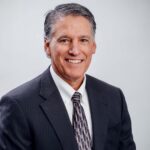
Mr. Douglass builds on an extensive background in development and planning that includes managing the construction of more than 10,000 homes – from entry level to multi-million dollar products and high-rise developments – with revenues well in excess of $3 billion.
Prior to joining Trumark Homes, he led Southern California operations as Division President for Ryland Homes, and has also served as Southern California Division President for Centex Homes.
Mr. Douglass is an integral member of the Building Industry Association of Southern California, where he held a position on the Governance Committee and also served as the President for the Orange County Chapter in 2004. For his commitment to the community beyond the building industry, he received the “Spirit of Life” Award from The City of Hope and the “Good Scout” Award from the Boy Scouts of America.
He has led teams who have won numerous local, regional and national industry design awards, including the Home of the Year at PCBC and Professional Builder of the Year in 2018.
A native of San Clemente, Mr. Douglass received his BA in Political Science from Long Beach State and attended Orange Coast College, where he graduated from the school’s Construction Technology and Applied Mathematics program. He is also a past AICP member of the American Planning Association.